
Halal: More Than Just “No Pork”
Ask most people what halal means and they’ll say “no pork, no alcohol.” That’s true, but it’s only the surface. Halal is a full framework covering how an animal is raised, how it’s slaughtered, how it’s handled in the kitchen, and even how it’s served. For a restaurant like Al Khaima, serving Gulf-Yemeni food in Geneva, halal isn’t a marketing label — it’s the foundation of the entire menu.
The Core Rules of Halal Food
Understanding halal starts with a few key principles set out in Islamic dietary law.
Permitted and Forbidden Ingredients
What’s Forbidden (Haram)
Pork and pork by-products, alcohol, blood, and meat from animals that died of natural causes or weren’t slaughtered according to Islamic rites are all considered haram, meaning not permissible.
What’s Permitted (Halal)
Beef, lamb, goat, poultry, and most seafood are halal, provided the animal was slaughtered correctly and nothing haram was added during preparation.
The Slaughter Process (Dhabihah)
For meat to be halal, the animal must be slaughtered by a swift cut to the throat, while invoking the name of God, and the blood must be fully drained. This process, called dhabihah, is considered both a religious requirement and, according to many, a more humane method than some conventional slaughter techniques.
Quick Tip
When dining out, “halal-friendly” and “halal-certified” aren’t always the same thing. Certified halal means the full supply chain — from farm to kitchen — has been verified.
Halal Beyond the Plate: Ethics and Sourcing
Halal principles also extend to how animals are raised and treated before slaughter. Many guests are surprised to learn that animal welfare is explicitly part of the tradition, with cruelty or unnecessary suffering considered incompatible with halal practice.
Traceability Matters
Knowing the Source
A genuinely halal kitchen can typically explain where its meat comes from and how it was certified, rather than relying on a vague label with no verifiable backing.
Consistency Across the Menu
Halal isn’t something a restaurant can apply selectively to a few dishes while cutting corners elsewhere — the standard is meant to run through the entire kitchen and every supplier relationship.
How Al Khaima Applies Halal Standards
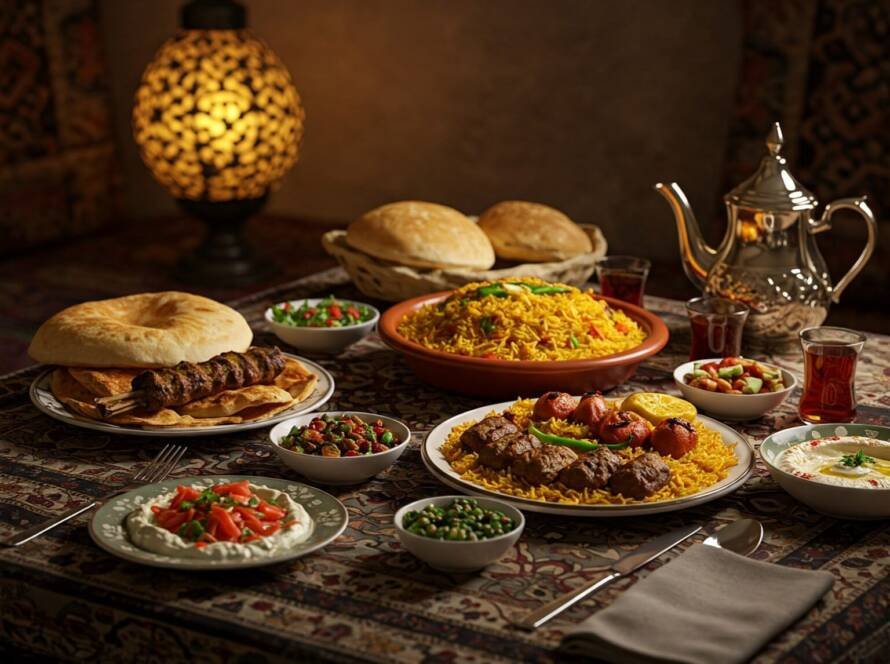
At Al Khaima, every meat dish on the menu — from our grilled lamb to our chicken Mandi — is sourced from halal-certified suppliers. This isn’t a partial policy applied to a few dishes; it runs across the entire kitchen.
Kitchen Practices That Matter
No Cross-Contamination
Halal and non-halal ingredients are never mixed, and utensils, grills, and prep surfaces are dedicated to halal food only.
No Alcohol in Cooking
Some restaurants use wine or other alcohol in sauces without guests realizing it. At Al Khaima, no dish contains alcohol, in any form, at any stage of preparation.
Did you know?
Halal dietary rules share several similarities with Jewish kosher laws, particularly around the method of slaughter and the prohibition of blood — which is one reason halal restaurants sometimes attract a wider range of guests looking for those standards.
Why This Matters to Our Guests in Geneva
Geneva has a genuinely international population, and many of our guests are looking for more than “no pork on the menu.” They want confidence that every step of the process — sourcing, preparation, and service — respects halal principles. That’s exactly the standard we hold ourselves to at Al Khaima.
A Menu Built Around Trust
From our salad dishes to our meat and chicken specialties, everything on the Al Khaima menu is prepared with halal integrity in mind, so you can order anything without needing to ask twice.
Why Guests Increasingly Ask These Questions
As dining audiences become more informed, fewer guests are satisfied with a simple “yes, it’s halal” without context. Understanding the reasoning behind halal rules — the slaughter method, the sourcing, the kitchen handling — helps guests make confident choices rather than taking a label at face value.
A Standard, Not a Marketing Word
At Al Khaima, halal isn’t used as a marketing term layered on top of a generic menu. It shapes supplier selection, kitchen procedure, and every dish that leaves the pass, which is part of why the restaurant has built trust among Geneva’s Muslim community and beyond.
Halal Dining in a Diverse City Like Geneva
Geneva’s international population means demand for genuinely reliable halal options is higher than in many smaller cities. International organizations, diplomatic communities, and long-standing local Muslim families all contribute to a dining scene where guests expect clarity, not vague assurances.
Setting a Consistent Standard
Because expectations vary from guest to guest, a restaurant that commits to one clear, consistent halal standard — rather than adjusting it case by case — tends to build the kind of long-term trust that keeps guests coming back.
Come Taste Halal Done Right
Al Khaima is located at 11, Rue Neuve-du-Molard, 1204 Geneva, open Tuesday to Sunday from 12:00 PM to 10:00 PM (closed Mondays). Reach us at +41 78 354 56 52 or info@al-khaima.ch, or simply walk in to see our halal Gulf-Yemeni menu for yourself.
Frequently Asked Questions
Is all seafood automatically halal?
Most schools of Islamic jurisprudence consider seafood generally permissible, though preparation methods and any added ingredients still need to meet halal standards.
Does Al Khaima serve alcohol?
No. In line with halal principles, our menu and kitchen are entirely alcohol-free.
Can I ask about the source of the meat before ordering?
Yes, our staff are happy to answer questions about sourcing and preparation for any dish on the menu.