
Hospitality Is the Main Ingredient
Before you think about the menu, it helps to understand the philosophy behind a Yemeni dinner. Hospitality, generosity, and togetherness matter as much as the food itself. Guests are rarely allowed to leave hungry, and the table is meant to feel abundant rather than portioned out.
Setting the Table the Yemeni Way
Traditional Yemeni meals are often served on large communal platters placed at the center of a low table or spread on the floor over a cloth, with everyone eating from the same dish.
What You’ll Need
Large Sharing Platters
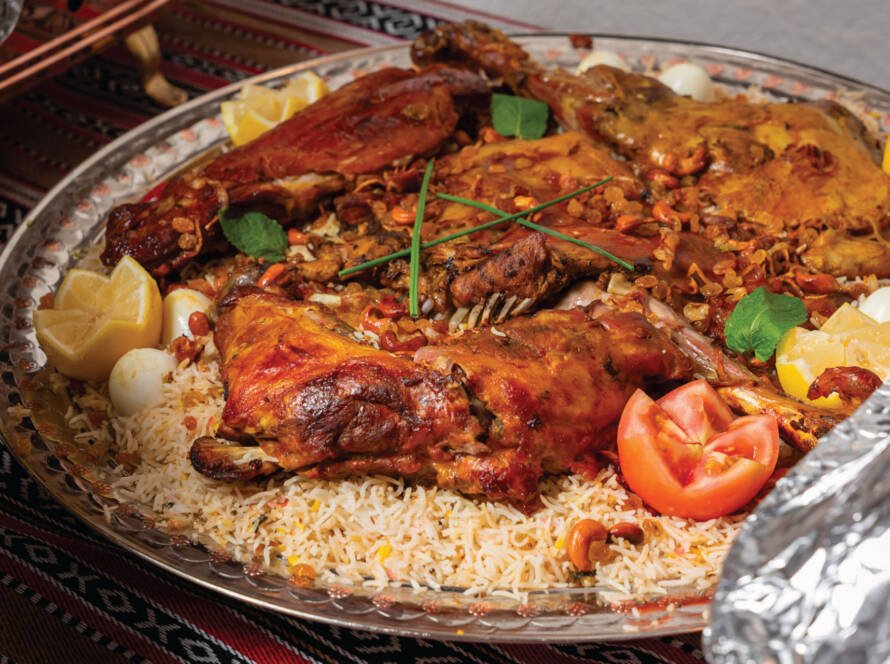
Instead of individual plates for the main course, use one or two large trays for rice and meat dishes, which encourages the shared-eating style central to Yemeni dining.
Floor Seating or a Low Table (Optional)
While not required, seating on cushions around a low table adds an authentic touch if you want to go the extra mile.
Quick Tip
Keep a stack of extra napkins nearby — Yemeni meals are often eaten by hand, particularly rice and meat dishes.
Setting the Right Atmosphere
Beyond the table itself, a few small touches help recreate the feeling of a Yemeni gathering rather than just serving unfamiliar food on familiar plates.
Music and Pace
Slow the Meal Down
Resist the urge to rush through courses. Traditional gatherings can stretch for hours, with conversation filling the gaps between food and coffee.
Welcome Guests Properly
A warm greeting and an offer of coffee or tea the moment guests arrive sets the tone before the meal even begins.
Common Mistakes to Avoid
A few missteps can make a home-cooked Yemeni meal feel less authentic than intended, even when the recipes themselves are accurate.
Over-Plating Instead of Sharing
Individual Portions Miss the Point
Splitting the main dish into individual plates ahead of time removes the communal element that defines the experience — resist the urge to plate everything separately.
Rushing the Coffee Course
Serving coffee too quickly, or skipping it altogether, cuts the evening short in a way that feels noticeably different from how the meal is meant to unfold.
Planning the Guest List and Timing
Yemeni dinners tend to work best with a flexible guest list and a loose sense of timing, rather than a tightly scheduled evening with a fixed start and end.
Leave Room for the Evening to Stretch
Plan for the gathering to run longer than a typical dinner party, since conversation over coffee at the end is considered part of the meal itself, not an optional add-on.
Building the Menu
A proper Yemeni dinner usually balances a rice-based centerpiece, grilled or slow-cooked meat, fresh salads, and bread.
The Centerpiece: Rice and Meat
Dishes like Mandi or Zurbian — rice slow-cooked with tender lamb or chicken and warming spices — work well as the star of the table.
Simple Sides That Round It Out
A fresh tomato and cucumber salad, along with flatbread, balances the richness of the main dish without much extra effort.
Did you know?
In many Yemeni households, it’s considered polite for the host to insist guests take more food, even after they’ve said they’re full — a small ritual of generosity repeated at nearly every meal.
Drinks to Complete the Experience
End the meal with Yemeni Qahwa — lightly roasted coffee spiced with cardamom — served alongside dates. It’s simple to prepare and instantly signals the meal is complete.
A Non-Alcoholic Table
Since Yemeni cuisine is typically halal, alcohol isn’t part of the meal. Mint tea, karak (spiced milk tea), or fresh juices are common alternatives throughout the evening.
Don’t Want to Cook? Let Al Khaima Do It
If recreating an authentic Yemeni spread at home sounds like a lot of work — because it genuinely can be — Al Khaima in Geneva offers the same dishes, prepared traditionally, without the hours of prep.
Group Dining Made Easy
Our sharing platters are designed exactly for this kind of gathering, whether it’s a family celebration or a dinner with friends who want to experience Yemeni hospitality firsthand.
Why This Approach Works So Well for Guests Unfamiliar With Yemeni Food
Sharing platters take the pressure off any single guest to pick “the right dish.” Everyone samples a bit of everything, which tends to make first encounters with unfamiliar cuisine far less intimidating than ordering one plated dish alone.
Letting the Table Do the Introducing
Rather than explaining every dish in detail before anyone takes a bite, a shared table naturally invites questions and conversation as the meal unfolds — much closer to how these dishes are actually enjoyed in Yemen.
Visit or Order From Al Khaima
Al Khaima is located at 11, Rue Neuve-du-Molard, 1204 Geneva, open Tuesday to Sunday from 12:00 PM to 10:00 PM (closed Mondays). Call +41 78 354 56 52 or email info@al-khaima.ch to book a table for your next gathering.
Frequently Asked Questions
What’s the easiest Yemeni dish for a beginner to make at home?
A simple chicken and rice dish with basic spices like cumin, cardamom, and turmeric is a manageable starting point before attempting more elaborate recipes.
Can Al Khaima cater a private dinner party?
For group bookings and special requests, it’s best to contact the restaurant directly by phone or email to discuss options.
How many people is a typical sharing platter meant for?
Sharing platters are generally designed with groups in mind, so ask staff for guidance on sizing when booking for a larger party.